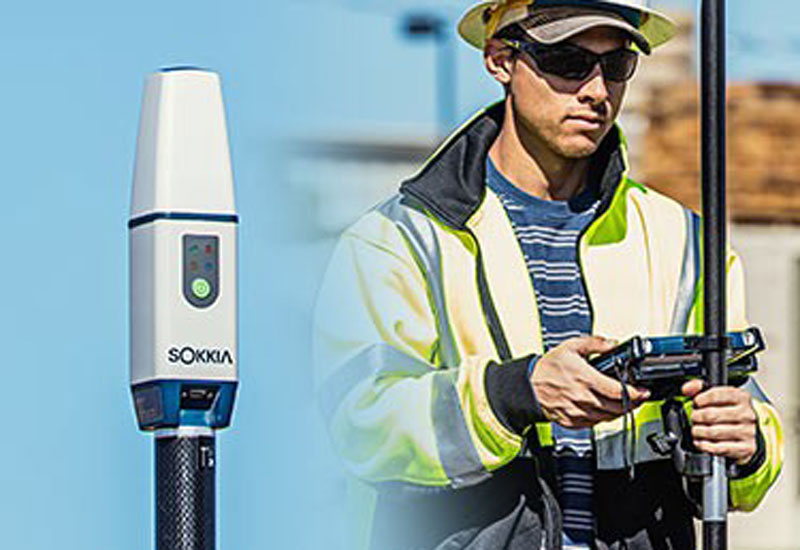
Sokkia introduces the latest addition to its GCX line of GNSS integrated receivers — the GCX3 — featuring advanced constellation tracking, open format software compatibility, and longer range base to rover communication, “The GCX3 features the new second generation POST2™ (Precision Orbital Satellite Technology) integrated antenna – adding BeiDou, Galileo, SBAS, QZSS, and GAGAN satellite tracking in addition to GPS and GLONASS to ensure the best positioning availability,” said Charles Rihner, vice president of the Topcon GeoPositioning Solutions Group. “Building on the success of its predecessor, the GCX2, the GCX3 offers all of the lightweight, compact and ergonomic benefits — along with centimeter-accurate positioning — now with expanded satellite tracking capabilities.” The GCX3 is designed as an open
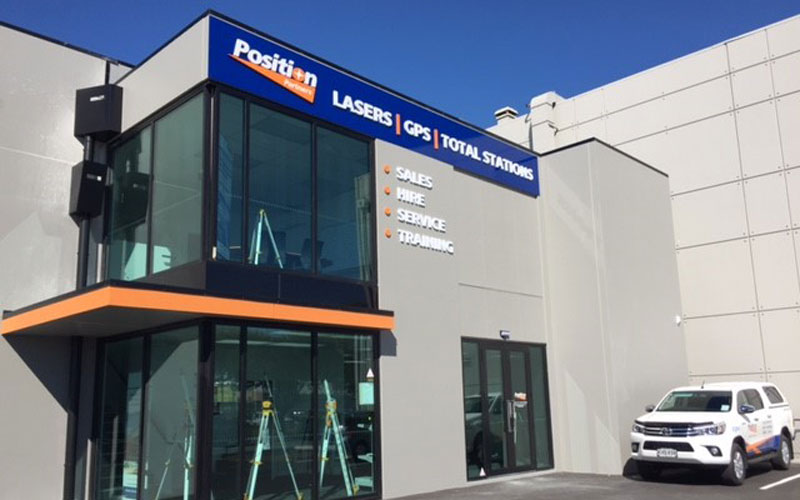
To meet the growing demand for our products and services in the South Island, we’re pleased to announce two new members to our Christchurch team as well as a brand new office! Our new address is: 4/48 Fitzgerald Ave in Christchurch central (behind the Ford Baker building) Our new location has been custom-fitted to include a training room, large warehouse, workshop for calibrations and services, plus a showroom to display the latest technology. We are now well placed to be your one stop survey and construction shop! Another perk of our new branch is the Purple Weka café next door. So pop in to say ‘hi’ and we’ll shout you a coffee! Meet our new team
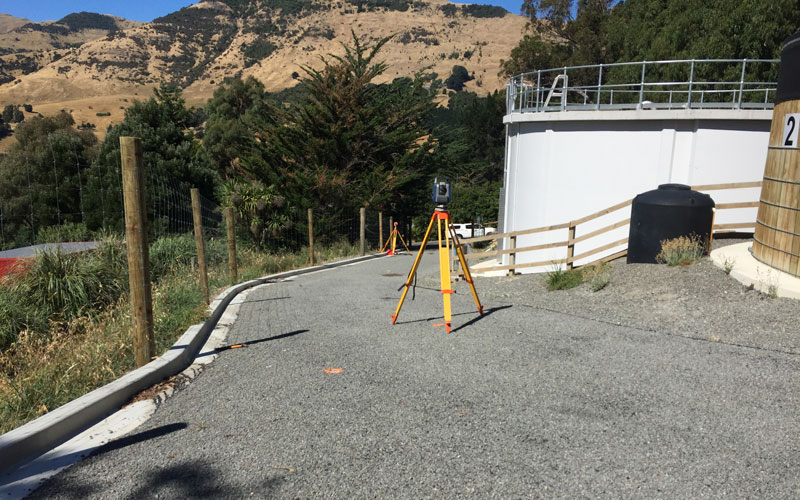
Christchurch-based survey firm Graham Surveying opts for Sokkia technology largely because it’s backed by support from Aptella Graham Surveying runs a six surveyor-strong team that offers a full range of cadastral, topographic and engineering surveying services throughout New Zealand’s South and Lower North Islands. “We have a steady work load that includes land development projects, construction set out, as-built and topographic surveys and infrastructure asset data collection,” said owner Richard Graham. Recently the company purchased a Sokkia robotic instrument, which unfortunately was damaged by an excavator after just a couple of weeks. Undeterred, Mr Graham then upgraded to the new Sokkia iX robotic, complete with MAGNET Field software, RC5 long range communication and SHC5000 survey tablet. To complete
International Earth Rotation and Reference Systems Service (IERS) announced there will be an extra second added to the end of this year (or the start of 2017 depending on your time zone!). An extra second will be added between 12:59:59 to 13:00:00 NZDT on 1st January 2017, or 23:59:60 on December 31, 2016 UTC. Such leap seconds are occasionally needed to ensure Coordinated Universal Time (UTC), the official measure of time, stays in sync with changes in the Earth’s rotation. GNSS equipment may experience issues acquiring or sustaining a fixed solution during this event. In some cases, a position solution may resolve itself after a new almanac & ephemeris are downloaded. However if you experience ongoing problems
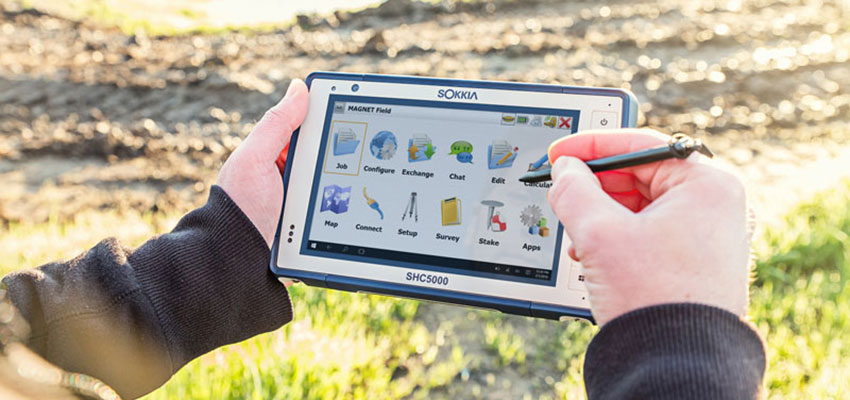
Now that you’ve made the easy decision to upgrade your old data collector to a modern tablet, what should you look for in a tablet to get the best bang for your buck? Not all tablets are the same, the surveying profession has unique requirements and sometimes it’s the small things that can make a big difference. Here are my top 7 features to get the most from your upgrade. 1. Battery Life Intel has made powerful fanless processors that have very low power consumption. However, the larger screen format of the tablet has a big impact on the battery life. A typical survey day would also include the Bluetooth and modem running full time, which further impacts
I can go on and on about Moore’s law but we see it in action every day. This year’s TV is bigger but thinner and has a higher resolution than the one you bought last year. It also connects to the internet, has cameras, can record TV and you can direct it with hand signals. Even your dog can use it if he’s good with his paws. The surveying industry is no different, in fact the technological advancements are happening so fast it’s can be hard for the suppliers to keep up to speed. So how can you the end user be expected to when you have your day job to worry about? The simple answer is, you
There has been a big trend in the global software industry away from buying and ‘owning’ a software licence in favour of taking out a monthly, quarterly or annual subscription. Whilst some survey software companies have been slow to roll out this new subscription or in some cases Software as a Service (SaaS) model, some developers are leading the charge and offering a full field to office workflow solution that can deliver big cost savings and dramatic productivity improvements. It’s likely that the computer you’re reading this on has several software packages already on a subscription based model. Microsoft office launched its 365 solution in 2011 and more recently Autodesk transferred its suites to a subscription only model.

If someone handed you a Nokkia 5110 to run your business you would likely laugh them out of the room…..after playing snake for a few minutes. The same could also be said for today’s smart phone, if it doesn’t have a data plan then it’s just a phone and not very smart at all, certainly not smart enough to help run your business. I could even go one step further and suggest that if your data isn’t centrally stored and accessible remotely then you might as well keep playing snake on the 5110. So why do I still see so many projects and surveyors using old data collectors when we are all using smartphones in our daily lives?


