



Thanks for your interest in this project. Here is the full article, which you can read in two ways: download as a PDF, or scroll down the page. If you’d like to discuss your project’s positioning infrastructure with Aptella’s team, get in touch with us today via phone or email
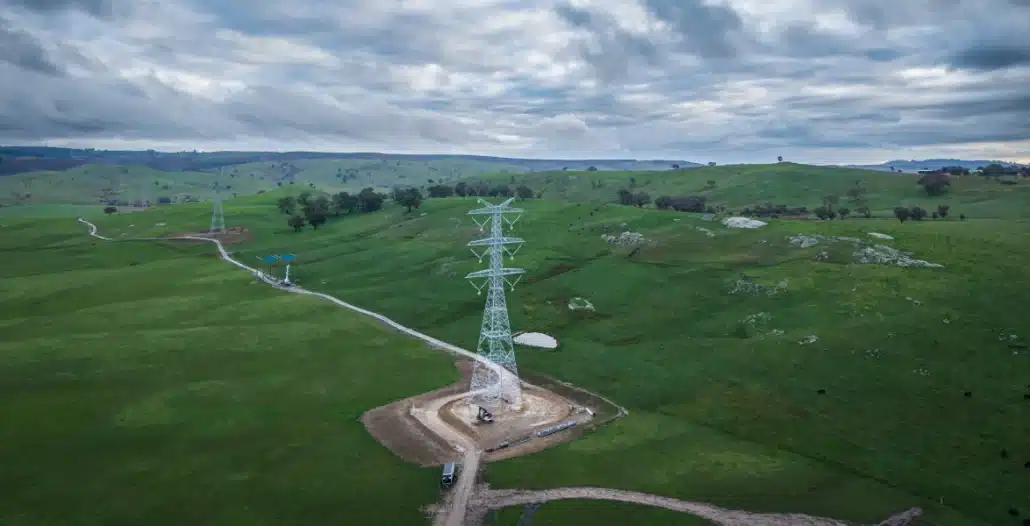
Acciona Genus JV (AGJV) is a joint venture between Acciona, a global infrastructure company delivering major construction, transport and energy projects from design through to operation and maintenance, and GenusPlus Group, an Australian power infrastructure provider, delivering the HumeLink East transmission project for Transgrid. This case study, by Aptella, a leading positioning and automation solutions provider, looks at how AGJV is guaranteeing coverage across the project using AllDayRTK Focus FX.
On HumeLink East, AGJV has embraced a smarter way to provide accurate positioning infrastructure across extensive projects in remote areas, and Aptella has put its newest base station technology to work on one of the country’s largest linear infrastructure builds. Read on to see how the partnership plays out on the ground.
On the HumeLink East transmission project, AGJV is building a 500kV double circuit line across 225 kilometres of remote New South Wales landscape, all the way from Bannaby to Wondalga. The corridor covers 459 tower pads and 370 kilometres of access track, much of it well outside reliable cellular range. Every surveyor, machine and supervisor on that alignment needs survey grade positioning, and there is no point on the site where a base station outage is acceptable.
Network RTK positioning services such as AllDayRTK, delivered via Continuously Operating Reference Stations (CORS), provides a cost-effective, repeatable and high accuracy solution for projects at scale. But outside of major infrastructure corridors and metro areas, there will be areas of limited coverage for projects of this scale.
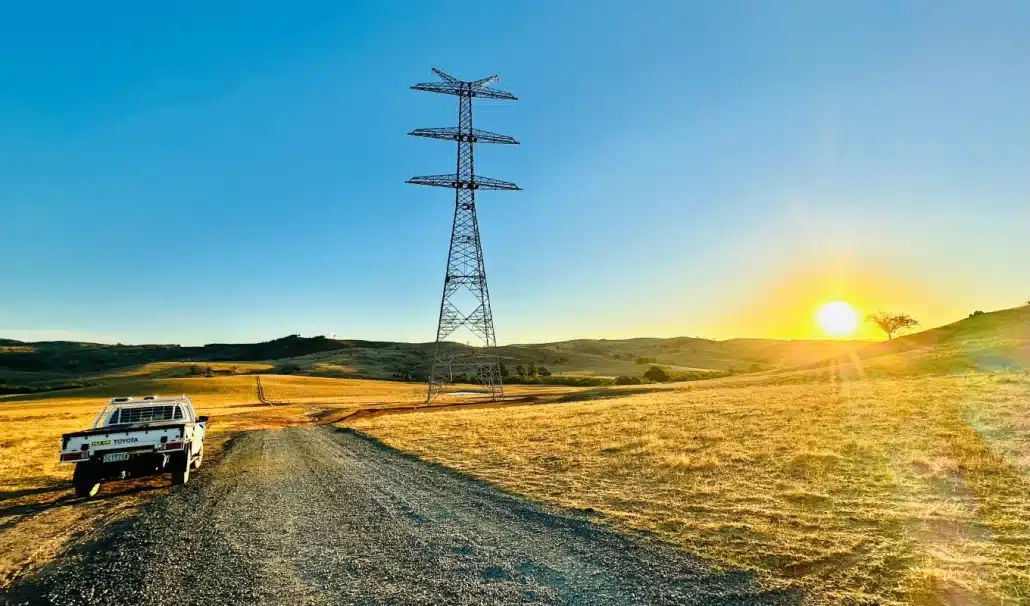
The traditional answer is more base stations to supplement and add to the network during the project. Buy them, truck them out, fence them, power them, and send a surveyor back out every time one needs resetting. On a project this size and this remote, that approach gets expensive fast, and every physical base is one more thing that can fail when cloud cover blocks the solar panel or livestock wander through the fence line.
Enter Aptella’s AllDayRTK network which gives AGJV a clear solution. Alongside permanent fixed bases and project-based Focus Bases, the network now includes Focus FX, a synthetic base station that can be quickly deployed and configured remotely, with no truck, no fence and no radio licence required.
Several months into the project, AGJV’s early estimate of how many physical bases they would need has changed. Today the team is almost fully reliant on synthetic bases, and coverage reaches more than 110 machines, surveyors and supervisors along the full alignment. The Q and A below sets out exactly how they got there and proved the accuracy, reliability and scalability of this innovative approach.
Running a large linear or remote project and want to talk through coverage before you’re deep into planning?
Get in touch with Aptella’s AllDayRTK team to discuss your project.