
Specialising in commercial upholstery and soft trim solutions for the heavy transport, automotive and indoor sports industries, Rae-Line is a Melbourne-based, family-owned company with more than 50 employees. Brett Vorhauer is the second generation owner and Managing Director of the firm, the son of Ray and Mary Vorhauer who founded the business in 1972. “We have been supplying and fitting the interior trims for Kenworth trucks Australia-wide for more than 40 years,” Mr Vorhauer explains. “Other clients include Iveco, Spotless and the Bounce indoor trampoline centres.” Rae-Line has also supplied canvas seating and seat covers for automotive companies including Toyota and Isuzu. Recently, Rae-Line invested in the latest 3D laser scanning technology to increase efficiency, reduce costs and
(From L-R: Frank Norton, Michael Wanrooy and Stuart Brown) Approximately four hours’ drive east of Mt. Isa lies the small town of Richmond in Queensland. On the western edge of town sits the Pioneer Cemetery, the final resting place for some 300 early Australian settlers according to Richmond Shire Council records. However these days only 35 or so headstones and grave markers are still standing and it is thought some of these may be placed inaccurately. Members of the community and the Council were eager to locate the remaining plots without disrupting the area with excavations. There was concern that many of the burial sites could lie outside the boundaries of the cemetery and perhaps under a carpark

Building Information Modelling or BIM is the latest buzzword in the construction industry, but only now are there viable technology solutions available to enable cross-industry collaboration on a truly meaningful and productive scale. Despite being the largest industry in the world and the fastest growing, construction is inefficient. By 2030 it is believed that construction demand will outweigh global financial capabilities by an estimated 60 trillion US dollars. I think it’s worth spelling that out in numbers for the full effect: USD $60,000,000,000,000. That’s a lot of zeros! In a local context, the construction industry contributes some 100 billion Australian dollars to the country’s GDP and employs around one million people. In such a large sector that is
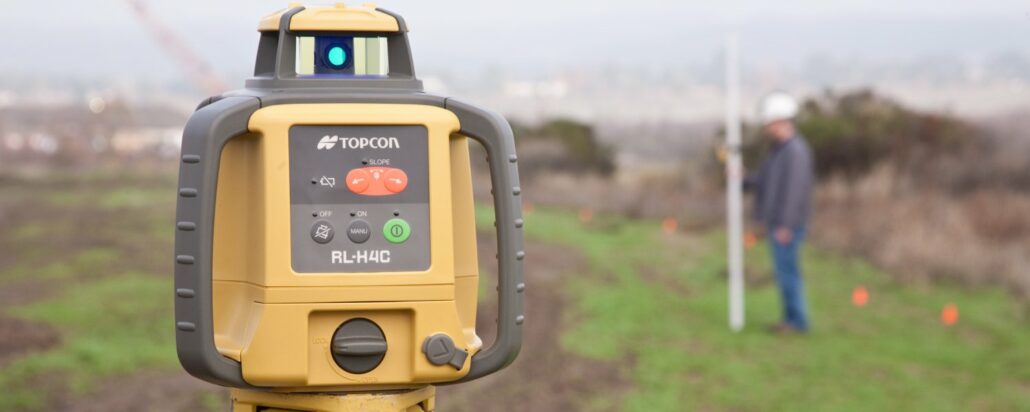
Topcon has set the standard for general construction lasers with its RL-H4C Series, which combine rugged hardware with advanced technology to deliver accurate, reliable positioning time after time and year after year. Ideal for a wide range of applications such as machine control work, site levelling with slope matching, concreting, foundations and general construction, Topcon’s RL-H4C is the only laser you need on the job! Unlike the many cheap imitations in the market that are uncalibrated and prone to fail after only a short period of time, Topcon lasers are built to last with high-quality Japanese manufacturing complete with 5-year warranty as standard. The RL-H4C does exactly what it says it will, day in, day out and
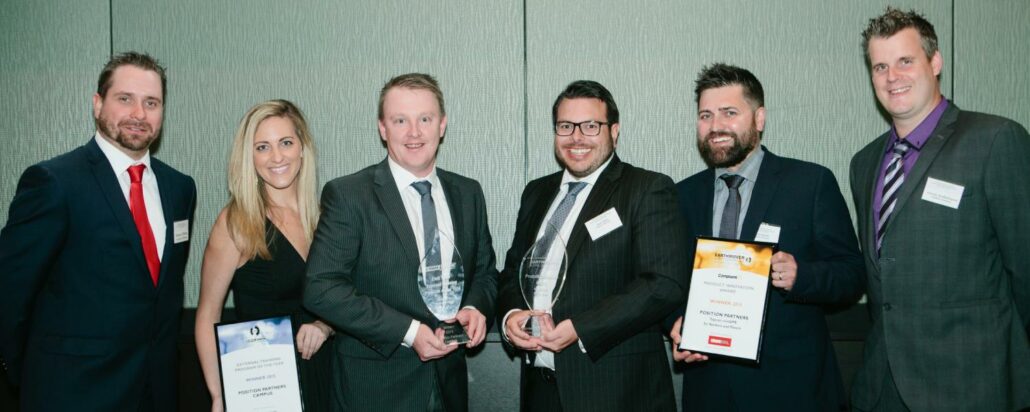
Aptella team from L-R: Shane O’Brian, Michelle Hinsch, Greg Macklin, Josh Allan, David Gentle and Johnny VanBellegooy. Aptella wins National Product Innovation and External Training Program of the Year awards At this year’s National Earthmover and Civil Contractor and Civil Train awards, Aptella took home the Product Innovation award for Topcon Millimetre GPS (mmGPS) machine control as well as the External Training Program of the Year for Campus machine control courses. Topcon mmGPS machine control is unique in the civil construction industry and it delivers unparalleled accuracy for fine grading applications through to kerbing and slipform paving. Unlike other solutions that can require multiple total stations to achieve the tight tolerances required for these applications, Topcon’s solution is

Introduction “The only thing that is constant is change” Heraclitus of Ephesus c. 535 BC-475BC As with recent advances in the fields of biotechnology, materials sciences and computing, the advent of new technologies in the field of geospatial engineering have the ability to radically reshape nearly every facet of human endeavour, creating opportunities for new jobs, new industries and new economies. The ability to integrate satellite and land based navigation positioning systems with three (3) dimensional computer models, real time communication networks and laser and inertial guidance technologies has underpinned a paradigm shift across multiple industries that has been described as the biggest change since the Industrial Revolution. (Caterpillar, 2006) Since its initial development for strictly military purposes,
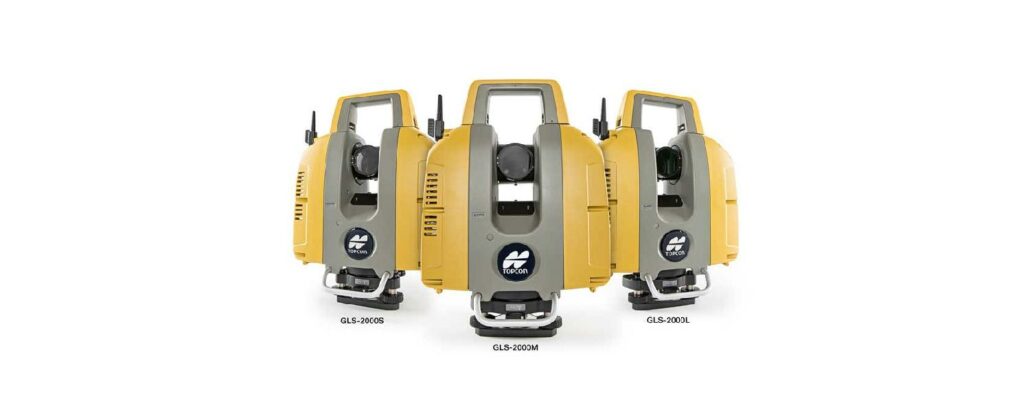
Topcon Positioning Group announces the release of three new models to the GLS-2000 Series of 3D laser scanners — the GLS-2000S, GLS-2000M and the GLS-2000L. The scanners are designed to capture data based on the measurement range needs of specific applications. “These new GLS-2000 scanners offer purposeful solutions and versatility that comes from the multiple measurement modes with each model,” said Charles Rihner, vice president for the Topcon GeoPositioning Solutions Group. “The S model is optimized for short-range applications, while the M and L models are perfect for medium and long-range measurement fields, respectively.” Using Topcon Precise Scan Technology II, the GLS-2000 models are designed to emit pulse signals three times faster than earlier GLS systems. “Using faster pulse
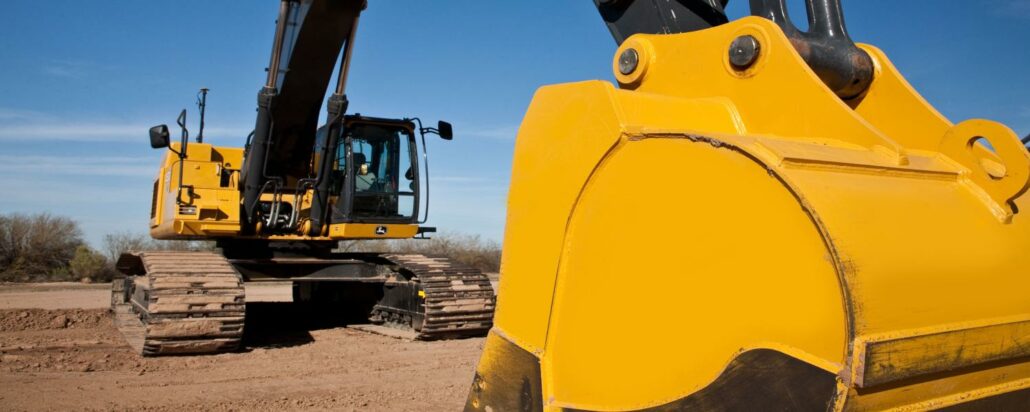
A little over a year ago, we introduced the Topcon X63i excavator system to the Australian Market. Unlike the X63 system, which continues in parallel, the X63i is designed specifically for excavators – and is cheaper! The reason for this is that an excavator GPS system is used for guidance rather than machine control, so there is no need to hook into the hydraulic system – saving around $20k in system cost. A further upside is that being significantly more compact, the X63i can often be integrated into the excavator whereas the bulkier machine control systems are generally removed from a machine at night. The downside is that the system can only be used on other excavators or


