Landscaping demands precision, but traditional methods leave too much room for error. You’re setting out with string lines, stakes, spray paint, and tape measures, often from printed plans that may already be outdated. Marks disappear once earthworks begin, and levels can shift as the project takes shape.
Whether you’re installing retaining walls, paving, irrigation, or shaping large commercial landscapes, accuracy matters. Incorrect falls create drainage problems. Misaligned features affect finish and function. Rework impacts both program and margin.
Once surfaces are formed or hardscape elements are installed, adjustments are costly. You need certainty that levels are accurate and features sit exactly where the design intended.
Digital workflows provide that control. Work from current plans on site, set out with millimetre accuracy, and verify positions and heights at any stage without relying on temporary ground marks.
Robotic total stations and GPS systems reduce rework, remove manual offsets, and allow you to produce accurate as-built records at handover. One operator can manage the process, confirm levels in real time, and deliver documentation that protects your business.
From residential projects to large commercial landscapes, we understand the accuracy landscaping requires and how to deliver it consistently.
Optical layout delivers sub 3 millimetre accuracy for landscaping work where levels and alignment matter. This is your solution when you’re working around structures, under cover, or in areas where GPS access is limited.
For landscapers installing retaining walls, stair sets, feature paving, edging, and structural elements, optical systems provide the precision needed to control heights, check falls, and align features accurately with surrounding buildings.
When drainage gradients, finished surface levels, and tie-ins to existing slabs must be exact, millimetre accuracy prevents costly rework.
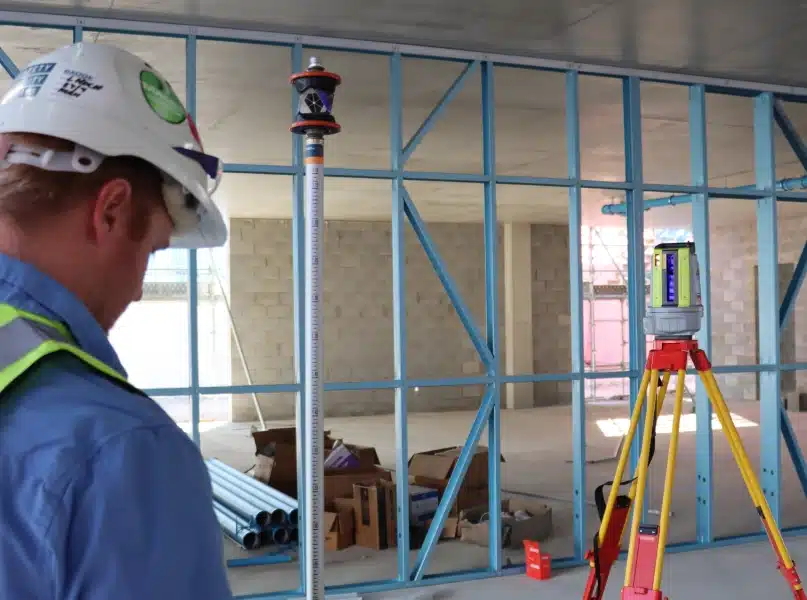
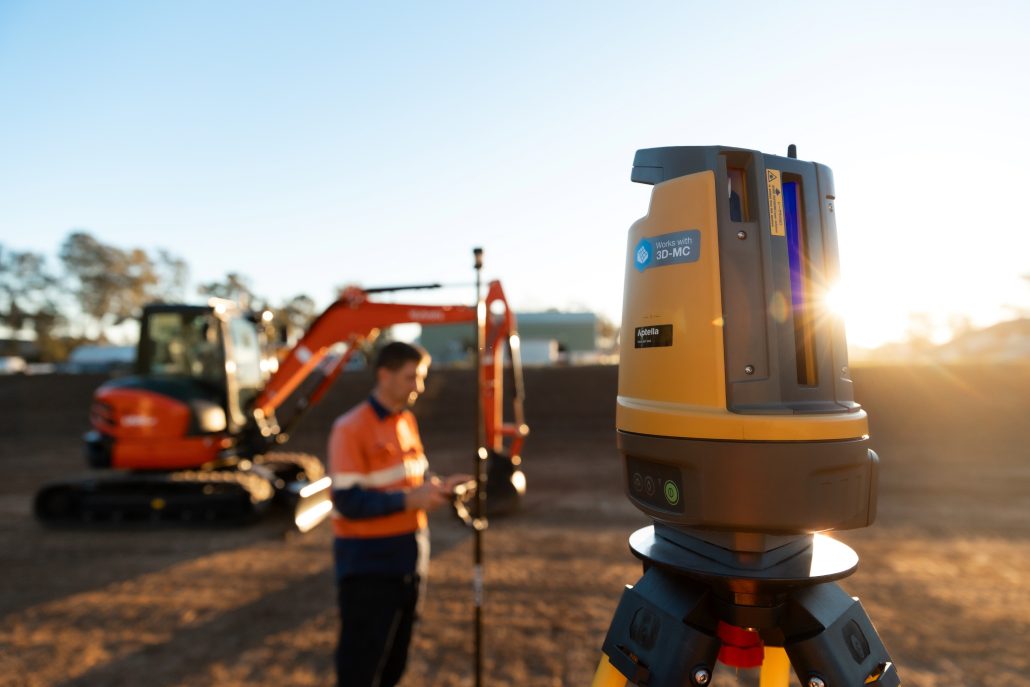
Instead of juggling dumpy levels, string lines, tape measures, and lasers, one robotic total station manages positioning, elevation control, and dimensional verification. A single operator can set out, recheck, and confirm installation in real time using current digital plans.
For contractors delivering high-end residential landscapes or detailed commercial projects, optical layout reduces risk and ensures finished levels match design intent the first time.
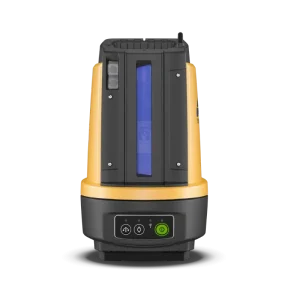
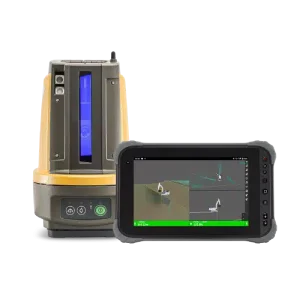
The Topcon LN-50 is your gateway to modern layout technology. It revolutionises entry-level layout by providing an affordable, easy-to use total station for contractors and builders transitioning to digital
workflows.
The worlds first 3D positioning system designed specifically for construction setout. The LN-160 builds on the foundation of the LN- 50, introducing greater versatility by offering a range of 130m, and the option of using Topcon Field Software.
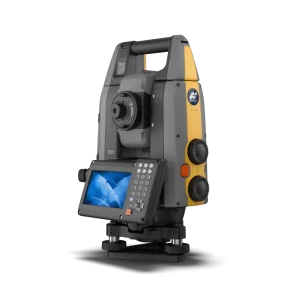
The Topcon GT Series represents the pinnacle of
robotic total station technology, delivering unparalleled accuracy, speed, and reliability for the most demanding projects.
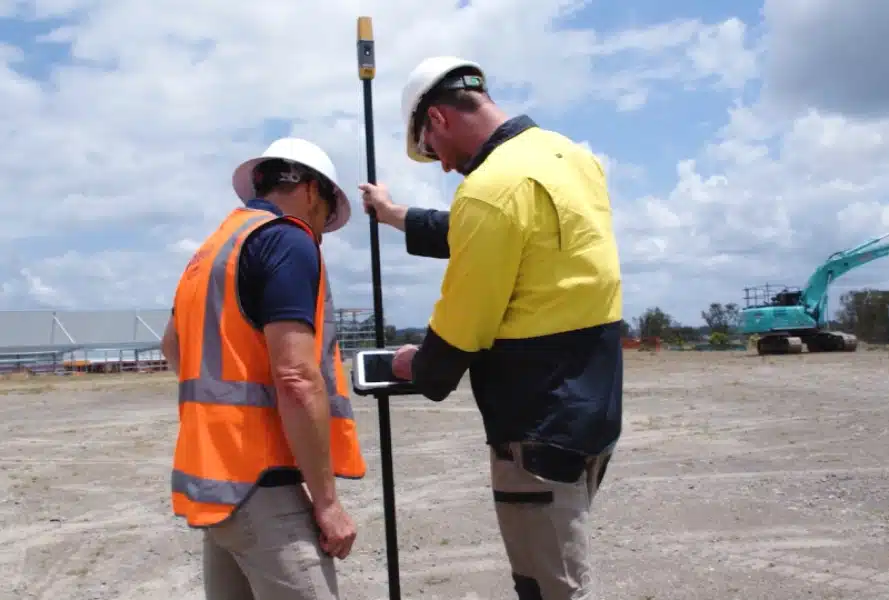
GPS is ideal for landscapers working across open sites before structures or dense planting limit sky access. Mark out garden beds, pathways, irrigation routes, lighting positions, and bulk earthworks areas across large residential estates, parks, or commercial developments with 20 to 30 millimetre accuracy.
You only need clear sky. There’s no need to establish control points for every setup, and no reliance on marks that disappear once excavation or shaping begins. Power up the rover and start positioning immediately.
GNSS excels during the bulk setout and shaping phase where speed and coverage matter most. Establish extents, define cut and fill zones, and position features quickly before transitioning to optical systems when tighter tolerances may be required for finished surfaces or structural elements.
For landscapers covering large ground efficiently, GPS reduces time spent measuring and increases confidence that everything is positioned correctly from the start.
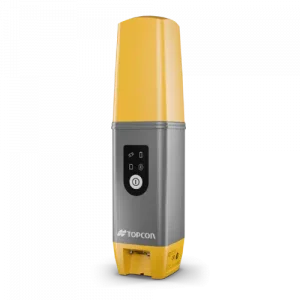
The HiPer CR is an ultralightweight and compact solution that minimises pole weight, ensuring easy mobility and field usability.
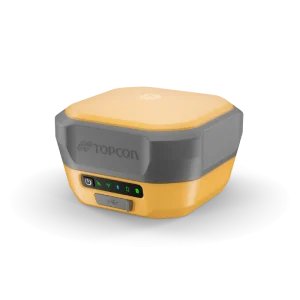
The HiPer XR delivers precision and efficiency, tackling your challenges with RTK accuracy and Dynamic TILT Compensation technology for effortless measurements even in difficult conditions. Its anti-jamming capabilities ensure reliable performance, while the lightweight, rugged design withstands harsh environments.
Machine guidance integrates positioning technology directly onto excavators and compact track loaders. Instead of manually marking out cut and fill zones, batters, or feature positions, the operator works directly from the digital design in the cab.
The machine displays real time bucket position against the plan, allowing shaping, grading, and excavation to be completed to design without repeated checking or ground markings.
For landscapers managing bulk earthworks, sports fields, large garden reshaping, or commercial site preparation, this significantly improves productivity and reduces double handling.
Working directly from digital plans, the machine always knows its location and target levels. This removes the need for constant verification cycles and allows crews to move efficiently from rough shaping to final trim.
Ditch setout in the ground. Don’t stress over lost marks or working from offsets. See and dig to design, directly from the comfort of your cab.
Prep for footpaths, garden beds, and retaining walls with precision.
External works teams benefit from MC-Mobile when grading driveways, preparing garden beds, or setting out retaining walls and drainage systems.
Reality capture creates a detailed digital record of completed landscaping works before elements are covered, planted, or handed over. Using SLAM scanning technology, you can rapidly capture point cloud data that documents finished levels, retaining structures, irrigation routes, and installed services.
This goes beyond marked-up drawings or photos. You’re creating a measurable three dimensional record that shows exactly what was built and where.
For commercial landscapers delivering council projects, public spaces, or large developments, this level of documentation provides clarity at handover and protects against future disputes. It also gives asset owners accurate information for maintenance, upgrades, or future modifications.
Instead of relying on memory or incomplete records, you retain a permanent digital reference of the project as it stood at completion.
Precision, accuracy, and reliability are central to what you do – they are the core principles of reality capture. And despite rapid changes, tighter budgets, and complex projects with stringent requirements, you’re still expected to do more – scan more, process more, model more, and offer more – with less.
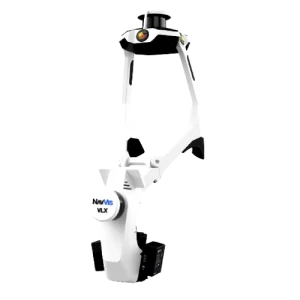
NavVis MLX offers an unrivaled combination of agility, ergonomics, and outstanding data quality from a handheld device. It seamlessly integrates into AEC, surveying, and reality capture workflows both on-site and in-office.
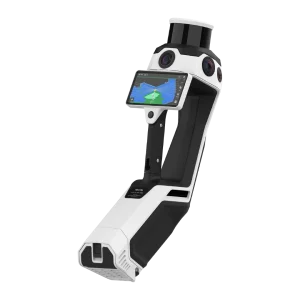
Portalcam is the first handheld device that captures reality as interactive 3D environments using breakthrough 3D Gaussian Splatting technology.
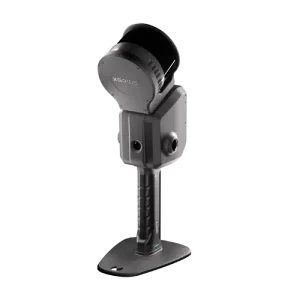
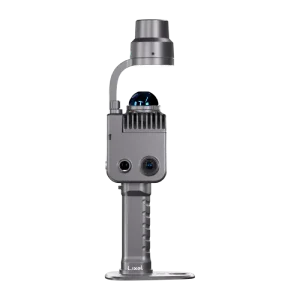
The Lixel L2 Pro is a highly integrated, high-precision handheld 3D reconstruction device featuring an all-in-one design and simple one-touch operation developed by XGRIDS.
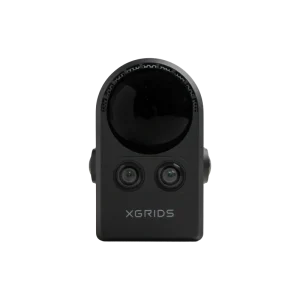
LixelKity K1 is a compact handheld scanning and modeling device newly introduced by XGRIDS. With a lightweight <1kg body, it integrates 48 MP ×2 panoramic vision modules and a 360° LiDAR, capable of real-time generation of centimeter-level colored 3D models.
Before you excavate for irrigation, drainage, or structural footings, subsurface detection technology helps identify existing underground utilities. Locating electrical, communications, water, and gas services before digging protects your crew and prevents costly damage.
For landscapers working in established residential areas, commercial precincts, or public spaces, understanding what lies below the surface is essential. Striking a live service can halt a project and create serious safety risks.
Utility location tools allow you to plan trench routes confidently, adjust alignments where needed, and reduce uncertainty before machines begin work.
Whether installing irrigation systems, garden lighting, or structural footings, subsurface detection supports safer excavation and stronger project control from the outset.
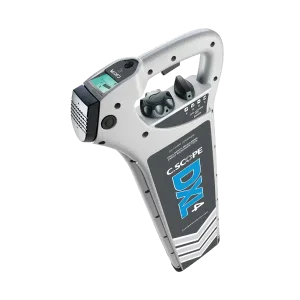
The DXL4 Cable Avoidance Tools from C.Scope represent a significant advance in cable detecting performance.
Two versions of the DXL4 are available; the DXL4-D which has full data logging capability, and the DXL4-DBG which has full data logging capability, Bluetooth™ connectivity and GPS.
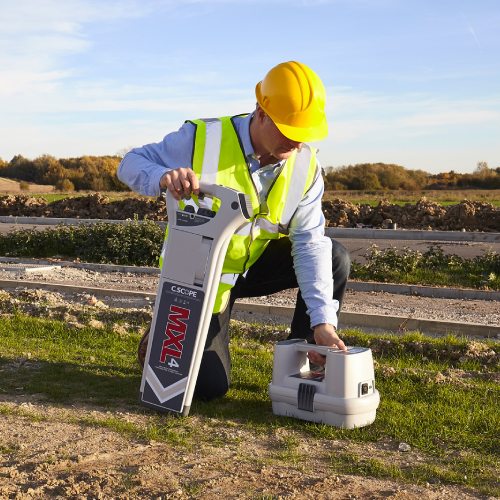
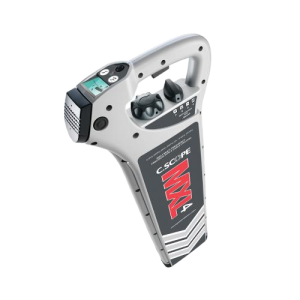
The MXL4 Precision Locator represents a significant advance in cable detecting and tracing capabilities.
Two versions of the MXL4 are available; the MXL4-D which has full data logging capability, and the MXL4-DBG which has full data logging capability, Bluetooth™ connectivity and GPS.
Optical layout delivers sub 3 millimetre accuracy for landscaping work where levels and alignment matter. This is your solution when you’re working around structures, under cover, or in areas where GPS access is limited.
For landscapers installing retaining walls, stair sets, feature paving, edging, and structural elements, optical systems provide the precision needed to control heights, check falls, and align features accurately with surrounding buildings.
When drainage gradients, finished surface levels, and tie-ins to existing slabs must be exact, millimetre accuracy prevents costly rework.
Instead of juggling dumpy levels, string lines, tape measures, and lasers, one robotic total station manages positioning, elevation control, and dimensional verification. A single operator can set out, recheck, and confirm installation in real time using current digital plans.
For contractors delivering high-end residential landscapes or detailed commercial projects, optical layout reduces risk and ensures finished levels match design intent the first time.
The Topcon LN-50 is your gateway to modern layout technology. It revolutionises entry-level layout by providing an affordable, easy-to use total station for contractors and builders transitioning to digital
workflows.
The worlds first 3D positioning system designed specifically for construction setout. The LN-160 builds on the foundation of the LN- 50, introducing greater versatility by offering a range of 130m, and the option of using Topcon Field Software.
The Topcon GT Series represents the pinnacle of
robotic total station technology, delivering unparalleled accuracy, speed, and reliability for the most demanding projects.
GPS is ideal for landscapers working across open sites before structures or dense planting limit sky access. Mark out garden beds, pathways, irrigation routes, lighting positions, and bulk earthworks areas across large residential estates, parks, or commercial developments with 20 to 30 millimetre accuracy.
You only need clear sky. There’s no need to establish control points for every setup, and no reliance on marks that disappear once excavation or shaping begins. Power up the rover and start positioning immediately.
GNSS excels during the bulk setout and shaping phase where speed and coverage matter most. Establish extents, define cut and fill zones, and position features quickly before transitioning to optical systems when tighter tolerances may be required for finished surfaces or structural elements.
For landscapers covering large ground efficiently, GPS reduces time spent measuring and increases confidence that everything is positioned correctly from the start.
The HiPer CR is an ultralightweight and compact solution that minimises pole weight, ensuring easy mobility and field usability.
The HiPer XR delivers precision and efficiency, tackling your challenges with RTK accuracy and Dynamic TILT Compensation technology for effortless measurements even in difficult conditions. Its anti-jamming capabilities ensure reliable performance, while the lightweight, rugged design withstands harsh environments.
Machine guidance integrates positioning technology directly onto excavators and compact track loaders. Instead of manually marking out cut and fill zones, batters, or feature positions, the operator works directly from the digital design in the cab.
The machine displays real time bucket position against the plan, allowing shaping, grading, and excavation to be completed to design without repeated checking or ground markings.
For landscapers managing bulk earthworks, sports fields, large garden reshaping, or commercial site preparation, this significantly improves productivity and reduces double handling.
Working directly from digital plans, the machine always knows its location and target levels. This removes the need for constant verification cycles and allows crews to move efficiently from rough shaping to final trim.
Ditch setout in the ground. Don’t stress over lost marks or working from offsets. See and dig to design, directly from the comfort of your cab.
Prep for footpaths, garden beds, and retaining walls with precision.
External works teams benefit from MC-Mobile when grading driveways, preparing garden beds, or setting out retaining walls and drainage systems.
Reality capture creates a detailed digital record of completed landscaping works before elements are covered, planted, or handed over. Using SLAM scanning technology, you can rapidly capture point cloud data that documents finished levels, retaining structures, irrigation routes, and installed services.
This goes beyond marked-up drawings or photos. You’re creating a measurable three dimensional record that shows exactly what was built and where.
For commercial landscapers delivering council projects, public spaces, or large developments, this level of documentation provides clarity at handover and protects against future disputes. It also gives asset owners accurate information for maintenance, upgrades, or future modifications.
Instead of relying on memory or incomplete records, you retain a permanent digital reference of the project as it stood at completion.
Precision, accuracy, and reliability are central to what you do – they are the core principles of reality capture. And despite rapid changes, tighter budgets, and complex projects with stringent requirements, you’re still expected to do more – scan more, process more, model more, and offer more – with less.
NavVis MLX offers an unrivaled combination of agility, ergonomics, and outstanding data quality from a handheld device. It seamlessly integrates into AEC, surveying, and reality capture workflows both on-site and in-office.
Portalcam is the first handheld device that captures reality as interactive 3D environments using breakthrough 3D Gaussian Splatting technology.
The Lixel L2 Pro is a highly integrated, high-precision handheld 3D reconstruction device featuring an all-in-one design and simple one-touch operation developed by XGRIDS.
LixelKity K1 is a compact handheld scanning and modeling device newly introduced by XGRIDS. With a lightweight <1kg body, it integrates 48 MP ×2 panoramic vision modules and a 360° LiDAR, capable of real-time generation of centimeter-level colored 3D models.
Before you excavate for irrigation, drainage, or structural footings, subsurface detection technology helps identify existing underground utilities. Locating electrical, communications, water, and gas services before digging protects your crew and prevents costly damage.
For landscapers working in established residential areas, commercial precincts, or public spaces, understanding what lies below the surface is essential. Striking a live service can halt a project and create serious safety risks.
Utility location tools allow you to plan trench routes confidently, adjust alignments where needed, and reduce uncertainty before machines begin work.
Whether installing irrigation systems, garden lighting, or structural footings, subsurface detection supports safer excavation and stronger project control from the outset.
The DXL4 Cable Avoidance Tools from C.Scope represent a significant advance in cable detecting performance.
The MXL4 Precision Locator represents a significant advance in cable detecting and tracing capabilities.
Two versions of the MXL4 are available; the MXL4-D which has full data logging capability, and the MXL4-DBG which has full data logging capability, Bluetooth™ connectivity and GPS.
Aptella has tailored the Tokara service to deliver benefits for a wide range of stakeholders
involved in a civil construction project, including: